Health is not a cost, it is an investment
The National Oncology Alliance patient rights and roles webinar series – the industry leader perspective
The third installment in our four-part webinar series was a powerful look at the industry perspective on the rights and roles of cancer patients in their healthcare journeys.
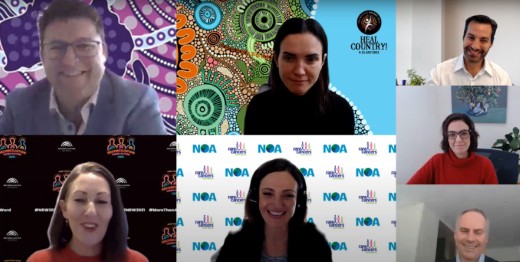
Yesterday, 28 July, a respected panel – including Managing Director at The Janssen Pharmaceutical Companies of Johnson & Johnson Bilijana Naumovic, Managing Director, Australia & New Zealand at Bristol-Myers Squibb Neil MacGregor, Country President at AstraZeneca Liz Chatwin, General Manager at Gilead Sciences Jaime McCoy, Managing Director at Roche Products Pty Ltd Stuart Knight, and VP and Managing Director, Australia and New Zealand, Merck Sharp and Dohme (Australia) Michael Azrak – gathered online to share their views from the experiences they have had working in industry markets overseas and within our region.
While coming from vastly different backgrounds, each panel member agreed that with advances in science, the current state of the health care system and the heightened focus on healthcare, now is the time for change in Australia when it comes to system reform and ensuring the patient voice is embedded within key decision-making.
“I think the tide is turning, I mean with the House of Representatives enquiry (into access to medicines), the noise is more like a crescendo isn’t it,” Liz Chatwin, Country President at AstraZeneca shared.
“You can hear it across Australia, that patient benefits, patient outcomes are really critical now to be included in a formal way in the evaluation process. And I think the government is really keen to do that as well, and the louder the patient organisations together with industry can promote that message then I think there will be a way that this can be recognised in the future.”
The challenge of properly defining what positive change looks like for the patients of today and tomorrow was highlighted, and an organised approach to advocacy was seen by many on the panel as the most effective way to encourage progress.
“Influencing how the cost of therapy is seen or how disease management is done is a very broad process that needs to incorporate a lot of things, and unless a patient organisation or a collection of patient organisations is clear in what they want to change, it is harder to make an impact with any government,” Bilijana Naumovic, Managing Director at The Janssen Pharmaceutical Companies of Johnson & Johnson explained.
The discussion quickly turned to the different ways in which change can be manifested, with panel members recognising the significant interest in clinical trialsresearch studies performed to test new treatments, tests or procedures and evaluate their effectiveness on various diseases, however highlighting the importance of ensuring sustainable long-term change remains the focus by looking at reform which enables faster access to treatment for patients, as opposed to relying on the process to obtain longer term data.
“At the end of the day patients are taxpayers, patients are constituents, and it’s a patient’s right to be able to have broad access (to treatment) in under 100 days from registration. We see it happening in other countries. There’s no reason why it shouldn’t be happening in Australia,” Michael Azrak, VP and Managing Director, Australia and New Zealand, Merck Sharp and Dohme (Australia) stated.
The risk of remaining stagnant is costly – for patients, government and our society as a whole.
“The science, which is our underlying core competency as a company, is moving faster than its ever moved in the past. If the system doesn’t change then not only will you see inequitable access, you won’t see access at all to some of the true innovations it’s providing into maintenance therapy, or in some cases into cure therapy,” Neil MacGregor, Managing Director, Australia & New Zealand at Bristol-Myers Squibb explained.
“If we truly want to put the rights of Australian patients at the heart of this, we have to continue to follow, we have to continue to make an investment window available where Australian patients can receive the best healthcare possible. There is a risk that if we don’t change then the reality of science will change faster, and then as such we will fall further behind.”
However, the challenges were acknowledged, particularly around how key stakeholders measure the value of medicines.
“I think we all understand and we often know that the medicines we produce, yes, they have a very clear clinical benefit, but there are often what we call secondary effects – they have huge impacts on quality of life, they have impacts for example on how the family might be operating,” Stuart Knight, Managing Director at Roche Products Pty Ltd said.
“Unfortunately not all of these parameters are taken into account by our paying systems, but we strongly believe that these are really important considerations that are critical to actually evaluating the value that a medicine can have.”
What remains clear is the important role patients play in informing and driving change because as all our panelists agreed, health is not a cost, it is an investment.
“One of the most important roles patients can play is helping us to really understand the value in the medicines we develop,” Jaime McCoy, General Manager at Gilead Sciences said.
“This is the idea that we design clinical trials but they don’t always recognise what patients see as great breakthroughs or great progress when it comes to their treatment. I think we have to be listening better to make sure that yes, our clinical trials meet the end points that they’re designed to meet to get us to a regulatory and reimbursement process, but as regulators and payers get better to listening to patients too, hopefully this will mean that we will develop medicines that more holistically address the concerns of patients as they’re fighting diseases that we are all dedicated to addressing.
“I think there’s a lot more room for improvement, we’ve come a long way, and there’s a lot still to do.”
If you would like to view the full webinar, click here:
Continue the conversation with us
This is the third webinar in our four-part series.
Our final session will be on Wednesday 4 August at 1 pm and will dive into the rights and roles of Australian cancer patients from the perspectives of those with lived experience of cancer:
- Lisa Briggs, rare cancer advocate
- Jelena Magic, parent and childhood cancer advocate
- Nick Kelly, advocate and past carer
- Joey Lynch, Canteen ambassador
- Nigel Marks, patient advocate
All are welcome and registration is free.
Don’t forget to pre-submit your questions for the panel when you complete the registration form, or you can send them to [email protected]