Prostate cancer is the most commonly diagnosed cancer amongst Australian men. As in every cancer type, there are unique sub-types, and each individual sub-type is rare. Rare sub-types are often aggressive and difficult to diagnose and treat.
The thing is ‘common’ cancers are more survivable because they’ve had decades of research and clinical trialsresearch studies performed to test new treatments, tests or procedures and evaluate their effectiveness on various diseases resulting in available treatments and cancer experts who have vast experience. Since so many people are affected around the world, information and support groups are easily accessible, in the form of written resources, online communities and foundations. The availability of clinical trials in itself means that doctors have good evidence on which to recommend particular treatments and optimal pathways.
However, when a cancer is rare or a rare sub-type, the experience can be completely different.
When a cancer is rare, there is limited information, the fewer cases mean that the clinical trials are harder to establish, resulting in fewer effective treatments and less expertise available.
Being diagnosed with prostate cancer that is rare often catches men by surprise. Despite prostate cancer being well-understood, having a rare type puts them in a similar predicament as those with a rare cancer. While the most common prostate cancer type is called acinar adenocarcinomacancer arising from mucus-producing glands in organs, rarer types differ because they are derived from different prostate cells or the normal prostate cells have mutated.
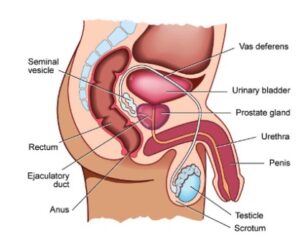
Rare prostate cancers include:
- Neuroendocrine prostate cancer: this develops from normal neuroendocrine cells found in the prostate gland, which usually are involved in hormone secretion.
- Ductal prostate cancer/adenocarcinoma (not the same as intraductal carcinomacancer arising from tissues that line organs of the prostate): this is the 2nd most common type of prostate cancer, although still considered rare. It is located near the prostate ducts and develops from gland cells in the prostate.
- Signet ring cell prostate cancer: this is very rare, and develops from prostate gland cells as well. It usually causes high PSA levels, so is easily detectable with a PSA test.
- Basal cell prostate cancer: this is very rare, and very little is know about it, other than it doesn’t show high PSA levels.
- Transitional cell prostate cancer: this usually starts in the bladder then moves to the prostate, but a rarer one starts in the prostate.
- Rhabdomyosarcoma: this is aggressive, commonly spreads, and is more common in children and young men.
There are more rare prostate cancers, but these are the main ones. Sadly, some are quite difficult to treat, thanks to a paucity of information. If you’re keen to know more, or you’ve been diagnosed with a rare prostate cancer and are looking for further support, please contact the Prostate Cancer Foundation Australia or us, at Rare Cancers Australia on 1800 257 600.
With thanks to resources from Prostate Cancer Foundation Australia.